Perspectives & White Papers
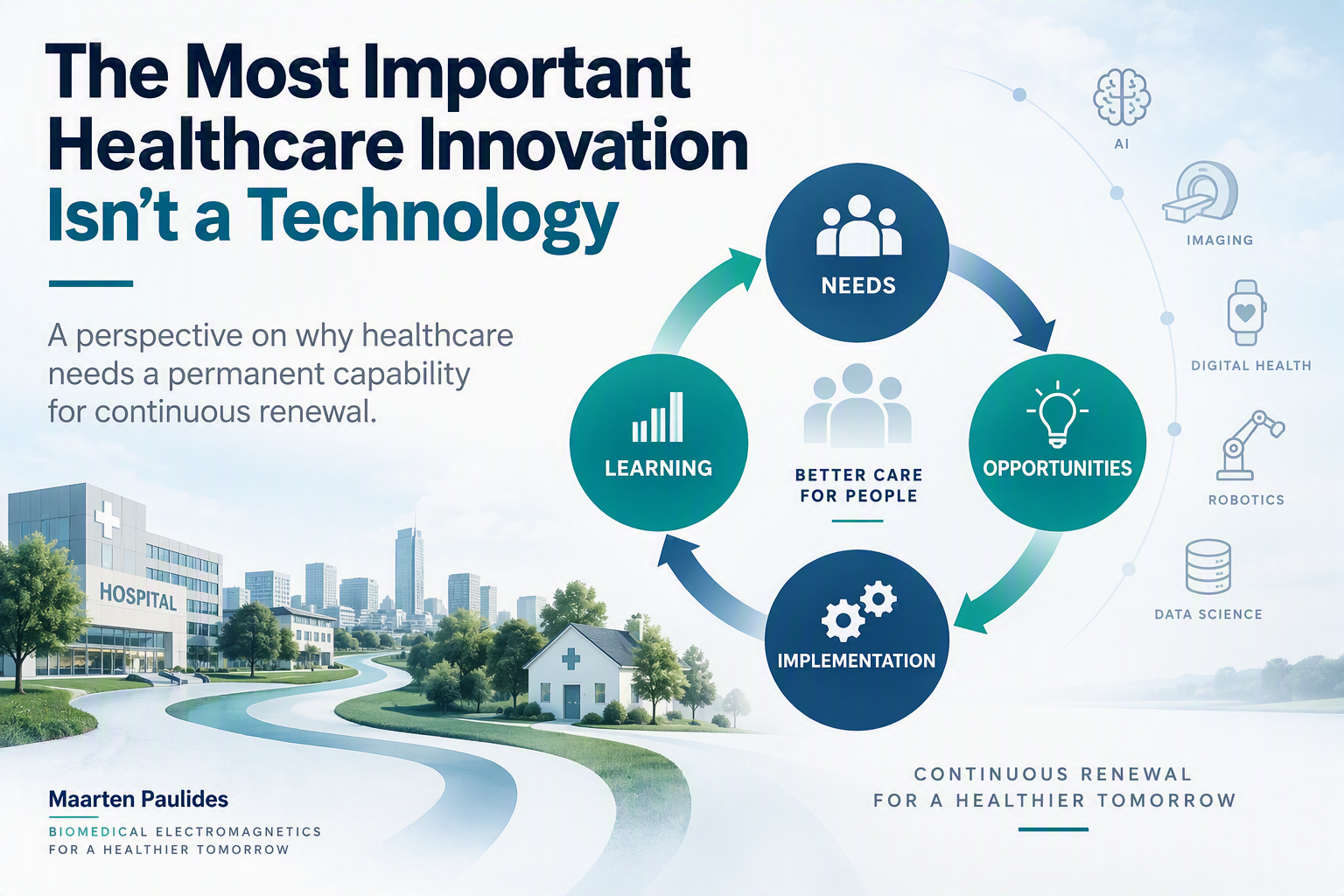
The Next Core Function of Healthcare
Perspective · 14 September 2026 · Maarten Paulides
Every few years, healthcare is confronted with a new wave of innovation. Today much attention is directed towards artificial intelligence. Before that came digital health, remote monitoring and precision medicine. Robotics, autonomous diagnostics, advanced sensing technologies and continuous feedback systems are likely to follow.
Each wave promises to improve healthcare. Yet each wave exposes the same weakness. Healthcare has become remarkably good at delivering care, but remains surprisingly poor at renewing itself.
Healthcare is entering a fundamentally different era. During much of the twentieth century, healthcare organizations operated in a relatively stable environment. Medical knowledge advanced steadily, while organizational change remained comparatively slow. Today, technological progress, workforce shortages, increasing demand and financial pressures interact continuously. Adaptation is no longer an occasional challenge. It is becoming a permanent requirement.
Innovation is often framed as a technology problem. We focus on algorithms, devices, software platforms and treatments. Yet most opportunities for improvement originate in daily practice. Clinicians, nurses, technicians, patients and caregivers are continually frustrated by fragmented care pathways, unnecessary variation, inefficiencies and unmet needs. Healthcare does not suffer from a lack of problems to solve. It suffers from a limited ability to systematically convert those problems into solutions while learning from the results. …
Why Building Ecosystems Matters in Biomedical Electromagnetics
Perspective · 31 August 2026 · Maarten Paulides
Looking back, many of the advances I am most proud of did not emerge from a single experiment, publication or technology. They emerged when researchers, clinicians, industry and healthcare organisations came together around a shared challenge.
In biomedical electromagnetics, progress increasingly depends on ecosystems that connect expertise, infrastructure and implementation. Such ecosystems not only accelerate innovation and patient impact, but also create opportunities for entirely new scientific discovery.
In this perspective, I reflect on why ecosystem building has become an essential part of my own work and why I believe it will become increasingly important for the future of healthcare technology.
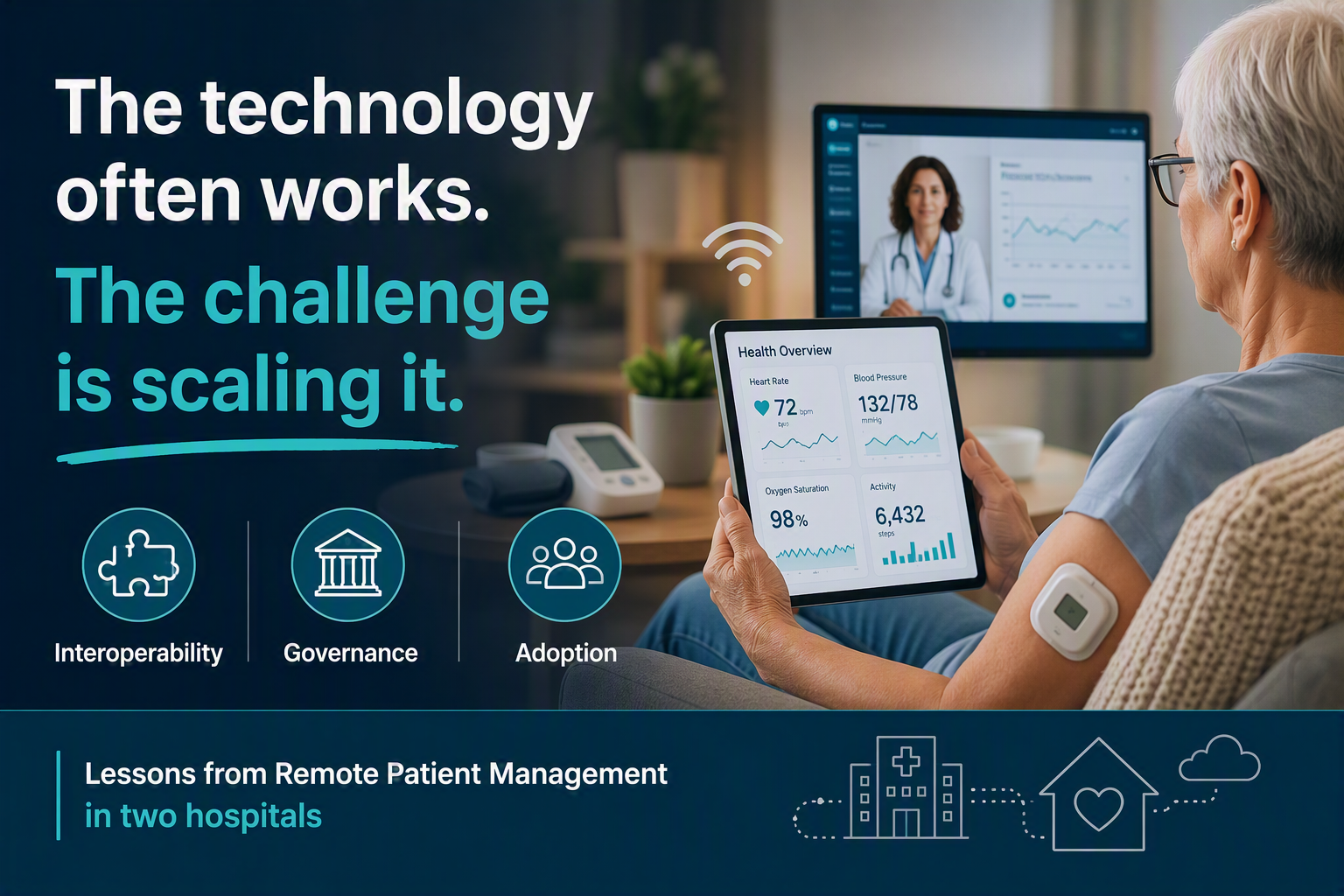
Scaling Medical Technology: Lessons from Implementing Remote Patient Management in Two Top-Clinical Hospitals
White Paper · 20 October 2025 · Paul Berger, Järl Blijd, Esther Gruintjes-van Gerven, Hareld Kemps, Maarten Paulides
New medical technologies are often evaluated by whether they successfully reach clinical practice. Yet real-world implementation can also become a powerful source of scientific insight.
Using two remote patient management (RPM) pilots at Catharina Hospital and Máxima MC within CICL/e (now the Taskforce Implementation of e/MTIC) as examples, this white paper illustrates how implementation exposes hidden barriers, reveals new research questions and helps build the capabilities needed for future innovation.
Rather than treating implementation as the final stage of research, our paper argues that it should be viewed as an important component of the scientific process itself.